We can help. Let’s talk about alternative options at (619) 222-6000.





A dental implant is a small, screw-like post usually made of titanium that is surgically placed into the jawbone to replace a missing tooth root. It serves as a stable foundation for a dental prosthesis, such as a crown, bridge, or denture, and can even support facial prosthetics or act as an anchor in orthodontic treatments. Over time, the implant fuses with the bone in a process called osseointegration, creating a strong and lasting bond that closely mimics a natural tooth.
Premium Implant Package
As low as $62/mo
from $2,499
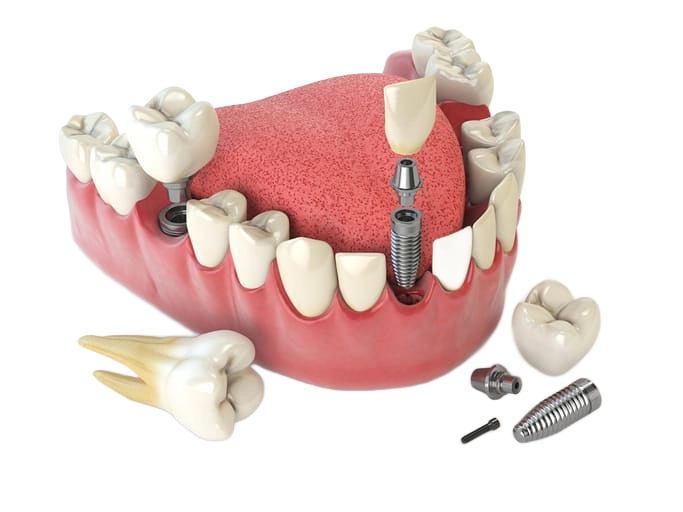
Includes Premium Implant, second stage surgery, custom abutment and zirconia crown.
A single dental implant is a highly effective solution for replacing one missing tooth. The implant is placed directly into the space of the missing or extracted tooth, acting as a secure foundation for your new restoration.
Each implant restoration consists of three key components:
Teeth in a Day
from $13,999
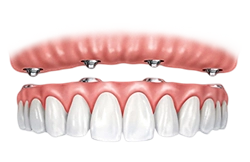
All-On-4 is a full-arch tooth replacement solution that uses just four strategically placed implants per jaw. In many cases, the implants and a temporary set of teeth can be placed on the same day, so you leave with a complete smile. While the area heals and the implants fuse with your jawbone through a process called osseointegration, you’ll wear natural-looking temporary teeth before receiving your final, permanent set.
from $16,999
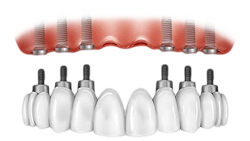
All-On-6 implants use six dental implants per jaw to support a full arch of teeth, offering enhanced stability and strength. The design resembles a dental bridge, with implant-anchored teeth supporting adjacent, non-anchored teeth. Implants are typically placed around the lateral incisors and canines. A temporary prosthesis is provided while your gums heal and the implants fuse to your jawbone through osseointegration.
from $19,999
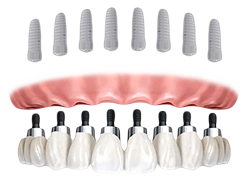
All-On-8 implants use eight implants per jaw to support a full arch of teeth, offering maximum stability. Similar to a dental bridge, the implants are typically placed toward the front of the mouth, including the central incisors, but placement may vary based on your anatomy. This option is ideal for patients who have lost 80% or more of their natural teeth and have sufficient jawbone density. In some cases, bone grafting may be needed before the procedure.
Unlike other tooth replacement options, dental implants can last for a lifetime. They are much stronger and able to withstand greater biting force and pressure compared to bridges and dentures. Most importantly, dental implants help retain jawbone density, which also prevents surrounding teeth from becoming loose or shifting position. Lastly, dental implants are as easy to care for as natural teeth. Just brush twice daily, floss regularly, and visit your dentist.
Step 1: Meet Our Team
It’s important to have a good rapport with your dental implant team so you can feel comfortable through every step of the process. During the consultation, you can get to know us a little bit and experience the comfortable environment of our office as well as the welcoming compassion of our whole team.
Step 2: Understanding the Procedure
One of the priorities of the consultation is to ensure that you have all the information you need. We’ll use the time to make sure you understand what happens during each step of the dental implant procedure, what you need to do to prepare, and what to expect during the postoperative period. We encourage you to ask any and all questions you have, no matter how insignificant you may think they are. Our goal is for you to leave the consultation with a firm understanding of the dental implant process.
Step 3: Oral Evaluation and Imaging
In order to determine whether you’re a good candidate for dental implants and to customize a treatment plan for you, Dr. Hage will need to evaluate your oral structures. This may involve an oral examination as well as a CT Scan or any other imaging necessary to ensure that you are in good health and that you have a sufficient amount of jawbone to hold the implants in place.
Step 4: Customized Treatment Plan
Once Dr. Hage has had a chance to evaluate the condition of your teeth and jaws, he’ll create a dental implant treatment plan just for you. This may be simple or fairly complex, depending on a number of different factors. You may need a tooth extraction, bone graft, or other procedure performed before you are able to undergo the dental implant procedure. If you do, this will be noted in your treatment plan. Dr. Hage will go over all the details of the plan with you during your consultation
Step 5: Transparent Pricing and Financing Options
At Smile Designers in San Diego, we believe in full transparency, which is why we provide patients with the total cost of their treatment plan at the time of the consultation. If you would like to add a cosmetic or restorative dental procedure to the treatment plan in order to save yourself another trip to the office, just let us know, and we’ll add it. During your consultation, we’ll go over the cost of your procedure and as well as your options for financing.
Step 6: The Next Step is Up to You
Our consultations are not only free of charge — they’re also free of pressure. You’re welcome to take the information home, think it over, and reach out when you’re ready. Or, if you feel confident and excited to move forward, you can schedule your next dental implant appointment before you leave our office. For more information about our free, no-obligation dental implant consultations in San Diego, call Smile Designers at (619) 222-6000 today.
1. The first step in the dental implant process is a thorough exam to plan exactly where the implants will go, and to remove damaged or decayed teeth as needed.
2. The dental implant surgery itself is split into two sessions: the first will involve implanting the titanium screws into the jawbone. Your dentist will attach a temporary abutment and stitch the gums closed over the implant. Stitches will be removed seven to ten days afterward.
3. The next portion of the surgery will have to wait until the first surgery is completely healed and the titanium screws are successfully fused to your jawbone. This can take four to six months. During the second surgical session, the dentist will make a small cut in the gums, remove the temporary abutment, and replace it with a healing cap that supports proper healing of the gum tissue.
4. Once your gums heal (10-14 days later), your dentist will make impressions of your mouth and remaining teeth to create customized prosthetic crowns.
5. While you wait for your permanent crowns, you will be provided with temporary crowns that will look and function like normal teeth. As soon as your permanent crowns are ready, we’ll replace the temporary ones, and you’ll be able enjoy your favorite foods and smile and laugh freely.
Full mouth restoration with dental implants is a comprehensive solution for patients who have lost most or all of their teeth due to decay, injury, or advanced gum disease. Full mouth restoration (also called full arch restoration or full mouth reconstruction) involves replacing all the teeth in your upper, lower, or both arches using dental implants. This treatment restores both the function and appearance of your smile using implant-supported restorations, such as bridges or full arches (like All-On-4, All-On-6, or All-On-8 systems).
The “best” type depends on several factors, including:
Here’s a quick comparison:
| Type | Implants per Arch | Best For | Bone Requirement | Longevity |
|---|---|---|---|---|
| All-on-4 | 4 | Moderate bone loss, fast treatment | Moderate | 15–20 years |
| All-on-6 | 6 | Best stability and durability | Good bone density | 20–25+ years |
| Zygomatic | 2–4 | Severe bone loss (upper jaw) | Minimal | 15–20 years |
| Single Implants | 8–12 | Few missing teeth | Strong bone | Lifetime |
Dental implant costs vary depending on the dentist and sometimes regional factors, but in general a single implant costs around $3,000-$4,500, including the surgery and all components.
For full-mouth or full-arch dental implants, the cost can run from $12,000-$25,000.
Regardless of the reason you might need a dental implant, most dental insurance policies still consider implants a cosmetic treatment and will not cover the entire cost. Some insurance policies will cover a portion of the cost, however, and most dental offices offer their own financing options to cover the rest. While the cost might seem steep at the outset, the overall cost for maintaining alternative restorations through years can exceed the initial cost of dental implants. And leaving a missing tooth gap untreated can also lead to poor oral health outcomes, and additional expenses, down the road.
The two main alternatives to dental implants are bridges and partial dentures. Bridges fill the gap from a missing tooth with a crown that is “bridged” with crowns on the adjacent teeth. Partial dentures fill the gap with a prosthetic tooth (or teeth) attached to a device that clips onto existing teeth. Both options are often difficult to clean, and typically must be repaired or replaced within 5-7 years. Also, neither bridges nor partial dentures aid in the prevention of jawbone deterioration, which happens when there is no natural tooth root or implant in place.
Most patients can return to work within 1–3 days, depending on the complexity of the procedure.
Yes, but brush gently around the implant site to avoid irritation.
Yes. Swelling typically peaks around 48 hours and subsides within 5–7 days.
Maintain excellent oral hygiene, avoid smoking, visit your dentist regularly, and protect your teeth from trauma.
Success stories that speak for themselves